The drum noise that means a bearing, and the one that means a coin
Two very different repairs that sound almost identical from the other room.
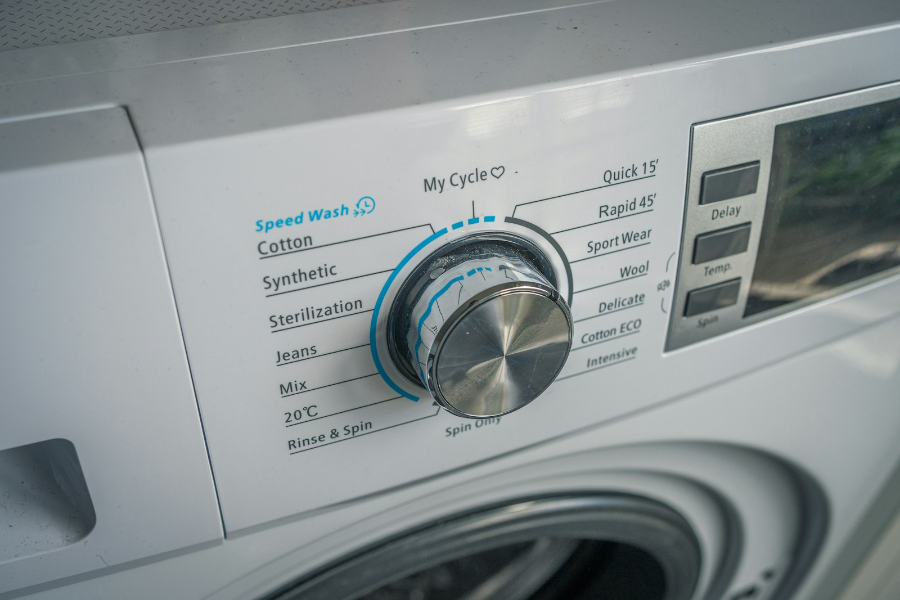
A washing machine that has started making noise on the spin cycle is either a fifteen minute job or a four hour one, and the difference is audible if you know what to listen for. The two faults we see most often are a foreign object trapped between the drums and a worn drum bearing.
The coin: a rattle that changes with speed
A coin, a button, or an underwire from a bra works its way through the drum perforations and sits in the outer tub. It rattles on the wash cycle, gets louder as the drum speeds up, and often stops entirely at full spin because centrifugal force pins it in place. That pattern — noisy at medium speed, quieter at high speed — almost always means a loose object.
Removing it usually means dropping the heating element out of the back and fishing the object through the opening. That is 120 to 250 riyals and under an hour, and it is worth doing promptly: a sharp object grinding against the tub will eventually hole it.
The bearing: a roar that grows with speed
A failed bearing sounds completely different. It is a low roar or grinding that starts quiet and rises continuously with drum speed, loudest at full spin, and it does not go away. Spin the empty drum by hand: if it feels gritty, or you can rock it up and down against the seal, the bearing has gone.
This is a serious repair. The machine comes apart, the outer tub is split or replaced, and the seal goes in with the bearing. Expect 450 to 950 riyals and three to four hours. On a machine over eight years old we will tell you honestly whether it is worth the money.
The third possibility: shock absorbers
If the noise is a heavy banging rather than a rattle or a roar, and the machine walks across the floor on spin, the shock absorbers or suspension springs have failed. Same symptom families, much cheaper fix, usually 180 to 350 riyals.
Before you call
Check the machine is level and that all four feet sit firmly on the floor — a surprising number of "bearing" calls turn out to be an unlevelled machine on a tiled floor. Then run an empty spin and note whether the noise rises with speed or peaks in the middle. Tell us which, and we will bring the right parts on the first visit.